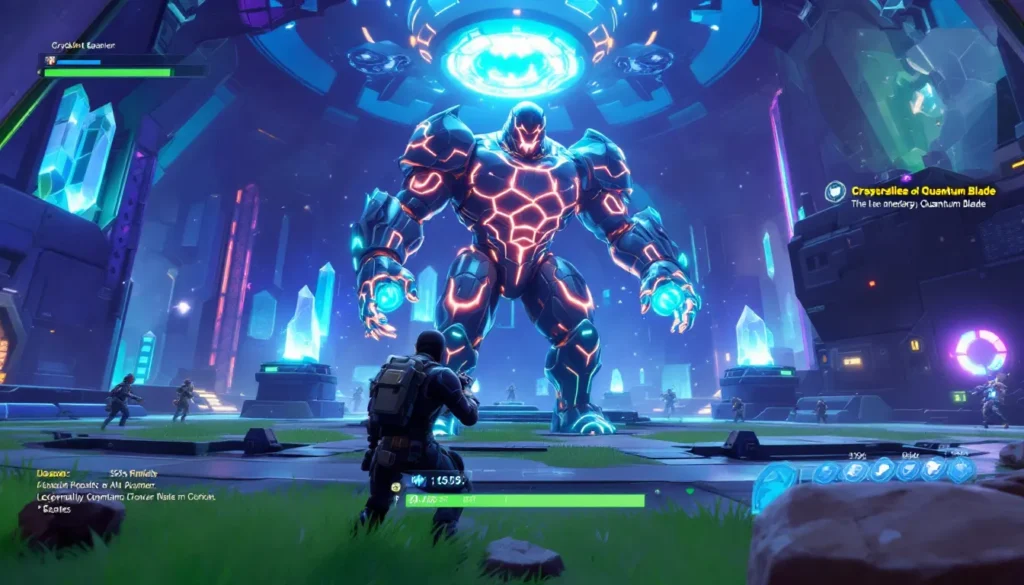
Fortnite Chapter 4 Season 3 is here, and it’s brought a stack of changes that fundamentally shift how the game plays. Whether you’re grinding ranked or just looking to rack up some casual wins, understanding what’s new is essential. From map overhauls to weapon adjustments and a narrative that ties into the larger storyline, this season’s packed with content worth your time. We’re going to walk you through all the critical updates, meta shifts, and strategies you need to stay competitive in the battle royale’s latest chapter.
Table of Contents
ToggleKey Takeaways
- Fortnite Chapter 4 Season 3 restructures the map with new locations and chokepoints that require adjusted landing patterns and rotation strategies to avoid third-party vulnerabilities.
- The Striker AR and Verdict Shotgun form the core weapon meta, with increased damage multipliers rewarding first-shot accuracy and positioning over spray mechanics.
- Building mechanics now feature reduced wall health (100 HP) and half-second edit delays, making build sequences more deliberate and favoring positional play over instant-build exploits.
- Weekly challenges and battle pass progression reward consistency across roughly 15-20 hours per tier through matches and daily quests, with free track cosmetics providing baseline customization.
- Pro players dominate Season 3 tournaments by maintaining 20-40 meter engagement distances, controlling map geography, and coordinating team rotations—strategies that casual players can apply to improve win rates.
What’s New In Fortnite Chapter 4 Season 3
Map Changes And New Locations
The map for Chapter 4 Season 3 has undergone significant restructuring. Epic Games removed several POIs from Chapter 4 Season 2 and introduced fresh territory that fundamentally changes rotations and early-game landing patterns. Landmark restructuring means your old drop habits won’t cut it anymore.
New named locations anchor the map’s east side, bringing unique aesthetics and loot distributions that reward exploration. Each new location ties into the season’s overarching narrative, with environmental storytelling that becomes clearer as you progress through challenges. Unnamed POIs scattered around the map offer varied terrain for rotations and late-game positioning.
Risky terrain modifications have altered chokepoints throughout the island. Some previously safe rotations now force direct engagement, which affects competitive edge positioning and third-party vulnerability. Players need to adjust their pathing accordingly or risk getting caught in unfavorable fights.
Battle Pass Rewards And Cosmetics
The seasonal battle pass offers 100 tiers of cosmetics, weapons, and XP boosts spread across free and premium tracks. Tier progression remains tied to battle pass levels, which unlock via matches, challenges, and daily quests. The grind is roughly consistent with previous seasons, so expect 15-20 hours per tier if you’re purely grinding matches without challenges.
Free track rewards include weapon wraps, emotes, and a starter skin, solid baseline cosmetics that don’t require spending V-Bucks. Premium track players get exclusive character skins with multiple style unlocks, pickaxes, gliders, and backblings that reflect the season’s theme. The legendary skin at tier 100 features reactive elements that activate during eliminations.
Weapon cosmetics this season are especially notable. They include tracers and camo patterns that don’t obstruct visibility on-screen. The animated pickaxe designs are flashier than most seasons, with transformations that trigger mid-match.
Weapons And Items
Several weapons entered the loot pool fresh this season, while others rotated out. The new Striker AR arrived with solid mid-range damage and better bloom than the previous assault rifle meta option. It deals 24 headshot damage per shot with 30-round magazine capacity, making it a reliable team-fighting tool.
The Verdict Shotgun replaced the prior shotgun option, offering tighter spread and marginally reduced close-range damage. Pro players are split on whether it’s an upgrade, but early tournament results suggest it rewards positioning slightly more than raw damage output.
Shield items received rebalancing. Small shields now restore 25 shield (down from 50), which tightens early-game decision-making around med efficiency. Med kits and slurps remain unchanged, but their rarity distribution shifted slightly in favor of found loot over floor drops.
A new tactical item, the Recon Drone, lets you scan buildings and reveal enemy positions for 15 seconds. It’s a support tool rather than a combat item, useful for scrims and coordinated team play but less impactful in solos or pubs.
Season 3 Theme And Story
Campaign Narrative
Fortnite Chapter 4 Season 3 continues the ongoing conflict between the Imagined Order and the resistance. The season’s narrative escalates previous plot threads, introducing a new threat that forces both factions to reassess their strategies. Campaign quests unlock weekly, revealing story beats through in-game events and cutscenes.
Players who complete the full quest line unlock exclusive cosmetics and lore insights. The main character involved is a returning figure with significant story weight, though Epic kept the specific details under wraps until season launch. In-game conversations during matches hint at larger developments coming in future seasons.
Environmental changes on the map reflect the narrative progression. Certain locations shift visually as weeks pass, indicating real-time story advancement. This dynamic world-building encourages players to revisit areas and notice subtle changes that drive engagement beyond pure gameplay.
Character Collaborations
Season 3 features major IP collaborations that introduced two licensed character skins. The first collaboration brought a popular action hero into the island, complete with a unique pickaxe and glider that match the character’s franchise aesthetic. The second collaboration targeted a different demographic, introducing a character from a successful anime series.
Collaborative skins typically unlock via tier progression or direct purchase. Prices remained consistent with previous crossover cosmetics, 1,500 V-Bucks for legendary skins with styles. Both collaboration skins received unique emotes that reference iconic moments from their respective franchises.
These collaborations don’t directly impact gameplay balance. They’re cosmetic-only additions that let players express their interests while maintaining competitive fairness. Esports regulations allow collabs in competitive play, though some pros avoid non-default skins for visual clarity and consistency across tournaments.
Game Balance Updates And Mechanics Changes
Gameplay Adjustments
Epic implemented significant changes to core gameplay mechanics this season. Elimination-based damage falloff now applies sooner, previously, players took full damage from any distance, but now damage drops 15% beyond 100 meters. This adjustment pushes long-range encounters into AR territory instead of sniper dominance.
Headshot multipliers received fine-tuning across weapon classes. Precision now rewards high-skill aim slightly more, with multipliers increasing from 1.5x to 1.75x for most weapons. This change particularly impacts AR and SMG fights, where first-shot accuracy becomes more consequential.
Spawning logic shifted to prevent hot-drop cluster formations. The game now encourages more distributed landing patterns by adjusting initial loot spawns. Players who land traditional hotspots find slightly fewer guaranteed weapons, creating incentive to explore secondary areas.
Revive mechanics saw minor adjustments. Teammates now instantly revive if they’re within 5 meters of the reviving player, removing the need for proximity maintenance during the animation. This quality-of-life change improves team fluidity without breaking balance.
Building And Combat Modifications
Building received comprehensive balance adjustments that pros are still analyzing weeks into the season. Wall health decreased from 110 to 100 HP, making early-game build fights slightly faster-paced. Ramp building uses slightly less material (15 instead of 20), incentivizing vertical fights over linear positioning.
Edit delays remain at 0.05 seconds, keeping the skill ceiling intact. But, pre-edits now require half a second of building ownership before activation, a deliberate nerf to instant-build exploits that dominated late-game endgames. This change makes build sequencing more deliberate and telegraphed.
Combat shotgun removal created a vacuum in the close-range meta. The Verdict Shotgun partially fills this role, but matches now reward better positioning over raw close-range DPS. Teams adapting to mid-range AR engagements outperform those trying to force shotgun fights.
Gliding mechanics got tighter. Glide speed increased marginally (by 3%), making rotations slightly faster but not game-breaking. This addresses feedback about late-game rotations feeling sluggish, particularly in tournament formats with storm timings that haven’t adjusted.
Best Tips For Dominating Season 3
Landing Strategies For New Locations
Landing patterns changed significantly with the map restructure. The new east-side locations draw early attention, creating predictable hotspots where you’ll face aggressive opponents immediately. If you’re seeking kills, these zones are ideal. For stability-focused players, secondary POIs on the island’s outskirts offer quieter early games with solid loot.
Early-game material gathering now emphasizes location choice over raw harvesting. New POIs feature denser object breakables, allowing faster material accumulation if you prioritize farming during the first two minutes. Traditional farming, hitting trees and rocks for 30 seconds, feels slower by comparison.
Rotation planning should account for the new chokepoint geography. The map’s restructuring means some mid-game rotations require navigating through open space with limited cover. Plan your positioning to avoid late-arrival into third parties. Practice 2-3 different rotation paths from your landing zone so you can adapt when opponents block your primary route.
Consider the storm’s position when landing. Early rotations toward storm center sometimes reward you with teams still farming or looting. Late rotations into safer zones mean facing circle-runners who’ve already engaged. Balancing risk versus positioning matters more this season due to the new geography.
Weapon Loadout Recommendations
A solid season 3 loadout typically looks like this:
- Slot 1 (Medium Range): Striker AR with ammo management favoring burst fire over mag dumps. The 24 headshot damage rewards accuracy, land headshots and you’re eliminating targets in 4-5 shots.
- Slot 2 (Close Range): Verdict Shotgun with positioning focus. This gun punishes poor distance judgment, so practice your effective range before committing to close fights.
- Slot 3 (Utility/Heals): Stack one offensive utility (grenades or the new Recon Drone) and one heal item.
- Slot 4-5: Remaining heal slots or secondary utility depending on team composition and playstyle.
Weapon scarcity early-game means you’ll sometimes run suboptimal loadouts. Prioritize eliminating opponents who have better guns. Trading weapons with kills is a viable strategy if you find a superior option mid-fight.
AR ammo consumption is higher than previous seasons due to bloom changes. Carry 180-200 rounds minimum for extended fights. Running low on AR ammo forces reliance on secondary weapons, which can be disastrous in team fights.
For competitive play, teams often run split loadouts, one player handles long-range AR duels while another specializes in close-range shotgun pressure. This specialization reduces ammo pressure and creates clear engagement roles.
Advanced Combat Tactics
First-shot accuracy is more valuable than spray-and-pray mechanics this season. With AR damage multipliers increased, landing your initial bullets before engaging is worth more than blindly emptying magazines. Practice tap-firing in matches, it feels clunky initially but rewards accuracy significantly.
Positional play eclipsed raw mechanical skill this patch. Teams that control high-ground and deny opponents escape routes consistently beat mechanically superior teams playing from inferior positions. Spend early engagements prioritizing terrain advantage over immediate eliminations.
Build sequencing matters more due to the edit delay changes. You can’t instant-build into an edit anymore, you need half a second of building ownership. This means builds are slightly more telegraphed. Anticipate opponent builds and prepare counters rather than reacting reactively.
Engage at 20-30 meters against competent opponents. This distance exploits ARs’ optimal range while avoiding shotgun effective distance. Most pub players engage at closer ranges, making this spacing surprising and advantageous. Position yourself at this range during rotations and team fights.
Third-party awareness intensified with the new map geography. Sound travels differently around new POIs, and sight lines shifted from previous seasons. Maintain constant awareness of ongoing fights and avoid being drawn into them unless you have a clear positioning advantage. Often, the correct play is letting two teams damage each other while you loot safely nearby.
Building rushes are less effective when opponents can prepare. Instead of rushing down an opponent, establish mid-ground building and force them into unfavorable trades. Many players panic when their high-ground is threatened, exploit this by establishing superior positioning before engaging.
Limited-Time Events And Challenges
Weekly Challenges And Rewards
Weekly challenges return in the familiar format: 7 challenges per week with varying difficulty. Easy challenges reward 15,000 XP, medium challenges 25,000 XP, and hard challenges 50,000 XP. Completing all weekly challenges nets 180,000 total XP, roughly 1.5 battle pass tiers if you’re running the premium pass.
Challenge design leans toward engagement-focused tasks rather than skill-gating. You’ll see challenges like “deal damage to opponents” or “land at named locations” rather than “get 10 sniper eliminations.” This approach keeps the battle pass accessible to casual players while still offering progression to hardcore grinders.
Daily challenges supplemented the weekly system, offering 40,000 XP per completion. Three daily challenges release daily, so you can claim up to 120,000 bonus XP per day if you maintain a streak. Missing days breaks momentum, but the XP catch-up system prevents permanent setback.
Quest challenges unlock story progression and exclusive cosmetics beyond battle pass rewards. These multi-stage challenges require specific actions (like eliminating opponents at certain locations), but rewards justify the grind. Story cosmetics typically match the season’s theme and carry narrative weight that feels earned rather than arbitrary.
Special In-Game Events
Fortnite Chapter 4 Season 3 featured weekly in-game events that players could participate in directly. Distinct from challenges, these events are live experiences, scheduled matches or temporary game modes that lasted for specific time windows. Early-season events included special respawn mechanics and modified loot pools that drastically changed optimal strategies.
Mid-season events escalated narrative tension and introduced temporary cosmetics exclusive to event participation. Players who attended specific events earned badges and cosmetic variants that communicated their engagement level to other players.
The When Is the Fortnite Event Today? guide on Warrior Gamers Arena tracks upcoming events and ensures you don’t miss limited-time opportunities. Event schedules typically release a week in advance, giving players time to coordinate with teammates.
Late-season events usually tie directly into next-season’s narrative setup. Previous seasons used final events as climactic moments, massive in-match cutscenes or environmental transformations that set the stage for future content. Season 3’s finale event is expected to follow this pattern, though Epic hasn’t officially announced specifics yet.
Esports And Competitive Updates
Tournament Format Changes
Epic adjusted tournament structures for Season 3 competitive play. Arena ranked seasons now run 6 weeks instead of 8, compressing the competitive calendar. This pace rewards consistency while reducing grind-fatigue that previous seasons introduced.
Rank distribution saw modifications. Ranks 0-4000 remain relatively easy to climb, but the 4000+ stretch became significantly more competitive. Placement-focused matchmaking now pairs you with similarly-ranked opponents starting at Rank 1500, eliminating the early-game stomp scenarios where low-ranked players faced competitive pros.
Major tournaments adopted standardized rule sets that leagues coordinate directly with Epic. Previously, tournament organizers ran independent formats. Now, official Fortnite Championship Series and regional competitions follow unified rules around weapon bans, map modifications, and elimination scoring. This standardization makes cross-tournament comparisons meaningful.
Prize pools increased compared to Season 2. Early-season Cups offered $500,000 total prize distribution, with top-8 finishers earning meaningful payouts. This funding attracts serious competitors and ensures professional players dedicate focused practice to the new patch.
Team composition formats varied by tournament. Some events required squads (4 players), while others ran duos or solos. Knowing the format weeks in advance lets teams practice with specific rosters. Flexibility across roster sizes is increasingly valuable as tournament variety expanded.
Pro Player Performance And Meta Shifts
Top-tier pros immediately adapted to Season 3’s balance changes. Early competitive footage shows AR-focused gameplay dominating over previous seasons’ shotgun-heavy strategies. Teams that practiced AR engagements before season launch grabbed early tournament wins, while traditional aggressive teams needed adaptation weeks.
The meta shifted from shotgun-rushing to controlled AR pacing. Pros now maintain 20-40 meter engagement distances, using AR accuracy and positioning to dictate fights. This change reduced mechanical outplay potential, raw aim still matters, but positioning became equally important.
Spread across the pro scene widened early season. Teams that understood the new weapon balance beat established squads who were slower adapting. This created exciting upsets in early-season tournaments and emphasized the importance of patch understanding over pure mechanics.
Pro loadouts converged around: Striker AR, Verdict Shotgun, two healing items, and one utility slot. Deviations from this template appeared occasionally (some teams ran Recon Drones for information advantage), but the core loadout remained standard across top teams.
Streamers and content creators on platforms like Dexerto covered the meta shift extensively, providing guides that helped casual players understand pro-level strategies. This transparency helps bridge the gap between competitive and casual play, allowing broader audiences to appreciate high-level gameplay.
Tournament winners through mid-season demonstrated consistent map control and decisive mid-game rotations. Teams that won early fights and then positioned safely for rotating won tournaments with surprising consistency. This emphasized that Season 3 rewards chess-like strategic thinking over purely mechanical outplay.
Cosmetics And Cosmetic Tier Progression
Seasonal Skin Lineup
Fortnite Chapter 4 Season 3 introduced 5 new exclusive skins tied directly to the battle pass. The main character, Sentinel, serves as the tier-1 starter skin with 3 style variants unlocking through tier progression. Sentinel’s design reflects the season’s narrative, featuring armor aesthetics that tie into the story’s faction conflict.
Secondary skins unlock at tiers 25, 50, 75, and 100. Each skin provides different aesthetic angles on the season’s theme. The tier-50 skin emphasizes sleek design, while tier-75 leans into bulky armor. The tier-100 legendary skin features a reactive component, it glows brighter with each elimination, giving visual feedback during hot-drop rotations.
Collaborative skins, as mentioned earlier, provided two additional character options. These cosmetics typically cost 1,500 V-Bucks directly and don’t require tier progression. Players who prefer licensed characters often skip battle pass cosmetics entirely, opting for collaboration skins instead.
Bundled cosmetics released throughout the season offered pickaxe, glider, and backbling combinations at discounted prices. Bundles typically cost 1,900-2,000 V-Bucks, roughly 500 V-Bucks cheaper than purchasing items individually. Savvy players wait for bundle releases to maximize cosmetic value.
Free Vs. Premium Rewards
The free track contains cosmetics worth approximately 600-800 V-Bucks if purchased separately. Free players get a starter skin variant, spray cosmetics, and emote options. While not as flashy as premium rewards, free cosmetics provide baseline customization without spending money.
Premium track cosmetics, unlocked with a $9.99 battle pass purchase, total approximately 3,000+ V-Bucks in value. Legendary skins alone cost 2,000 V-Bucks, so battle pass players effectively save 1,000 V-Bucks by purchasing the pass. Additional pickaxes, wraps, and emotes add to the value proposition.
Battle pass ROI becomes apparent quickly. If you complete 40+ tiers through gameplay and challenges, you’ll recoup the $9.99 cost through cosmetics you’d otherwise purchase. Most players reach tier 50-60 naturally through regular play, making the pass a smart investment for engaged players.
Crossover skins blur the free/premium distinction. Some collaboration cosmetics released at lower price points (1,200 V-Bucks) for limited periods, while others maintained standard 1,500 V-Bucks pricing. Checking the item shop daily ensures you catch discounted cosmetics before prices normalize.
The Lyric Fortnite: Elevate Your Game with Music and Fun article explores cosmetic customization options and music elements that enhance your Fortnite experience. Cosmetics carry personal expression weight in Fortnite’s community, your skin choice communicates playstyle, income level, and franchise preferences to other players.
Common Issues And Troubleshooting
Performance Optimization Tips
Season 3’s new map introduced new visual assets that occasionally tank frame rates. If you’re experiencing FPS drops, verify your graphics settings align with your hardware. Console players can’t adjust settings directly, but enabling Performance Mode prioritizes frame rate over visual fidelity on PS5 and Xbox Series X.
PC players should check these settings if experiencing stutters:
- Resolution: Lowering from 1440p to 1080p dramatically improves frame rate with minimal visual impact. Competitive players often run 1080p even on high-end rigs.
- Render Distance: Reducing render distance from Epic/Ultra to High can save 15-20 FPS. Objects beyond 100 meters become harder to see, which impacts long-range awareness.
- Shadows: Disabling dynamic shadows and running static shadows saves consistent frames without gameplay impact.
- Anti-Aliasing: TAA (Temporal Anti-Aliasing) is GPU-hungry. Switching to FXAA reduces blur but improves frame rate.
Memory leaks appeared early-season for some players, causing progressive frame rate degradation throughout long gaming sessions. Epic released a hotfix addressing this, but if you’re experiencing this issue, restart Fortnite every 4-5 hours to clear memory.
Network optimization matters as much as graphics settings. East Coast North American servers have historically better latency consistency, while West Coast players should check their ISP configuration. VPNs occasionally improve connection stability if you’re experiencing packet loss.
Mobile players on iOS note that Fortnite isn’t available through the official App Store. You’ll need to use Epic Games App or third-party distribution platforms. This limits optimization options compared to console and PC versions.
Known Bugs And Fixes
Early in the season, a significant bug caused builds to occasionally fail placing even when material was available. Epic pushed a hotfix within 48 hours of discovery. If you’re experiencing build failures, verify your materials are genuinely present, sometimes the HUD display lags behind actual inventory.
Weapon swap lag appeared in some matches, causing delays between picking up new weapons and them becoming usable. This typically occurs on high-ping servers (100+ ms). Switching servers or queuing at different times can alleviate this issue. If it’s consistent, contact Epic’s support team with match replays.
Cosmetics occasionally display with texture errors, missing colors or distorted models. Restarting Fortnite usually fixes this. If errors persist across multiple launches, verify your game files through your platform’s verification tools (Steam, Epic Launcher, console management).
HUD scaling issues affected some ultra-wide monitor users. The cross-hair and health bar appeared off-center on 21:9 displays. Epic acknowledged this and released a patch, but some residual issues remain for specific monitor configurations.
Challenge tracking glitches occasionally occur, where completed challenges don’t register reward XP. Epic’s support team can manually credit XP if you provide match replay evidence. Most players simply re-complete affected challenges since they count the second time through.
Audio bugs appeared in early competitive tournaments, some players reported opponents’ footsteps being audibly muted. This is a known issue Epic is investigating. Until fixed, using headphones with strong positional audio (3D audio on console) helps compensate.
If you’re experiencing issues not listed here, GamesRadar+ maintains updated bug trackers and community-verified solutions. The Warrior Gamers Arena Scourge Fortnite: Master guide also addresses specific performance scenarios and gameplay issues. Gaming communities like Reddit’s r/FortniteCompetitive track emerging bugs faster than official channels, checking recent threads helps identify whether an issue is widespread or isolated to your setup.
For game files corruption, use the What Time Does the Fortnite Season End? resource to understand when maintenance windows occur. Epic often resolves persistent issues during scheduled downtime.
Conclusion
Fortnite Chapter 4 Season 3 delivers meaningful gameplay changes that reward adaptation and smart positioning over pure mechanical skill. The map restructure, weapon balance adjustments, and competitive shifts create a fresh experience that separates veterans from casual players based on strategic understanding rather than aim alone.
Your immediate focus should be adapting your landing strategy to the new map, practicing the Striker AR’s tap-fire accuracy, and learning where the new chokepoints create third-party vulnerability. These fundamentals establish baseline competency in Season 3’s meta.
Pro-level play shows that positioning and team coordination matter more than ever. Watch competitive matches on GameSpot or Dexerto to see how top teams navigate the new geography and spacing. Applying even 20% of pro strategies dramatically improves your win rate.
The season runs until the next major patch, so you have time to experiment and find your playstyle. Battle pass progression rewards consistency rather than grind intensity, play regularly and complete challenges, and you’ll unlock everything before season end. Whether you’re chasing cosmetics, competitive rank climbs, or casual wins, Season 3 provides content depth that justifies your time investment.