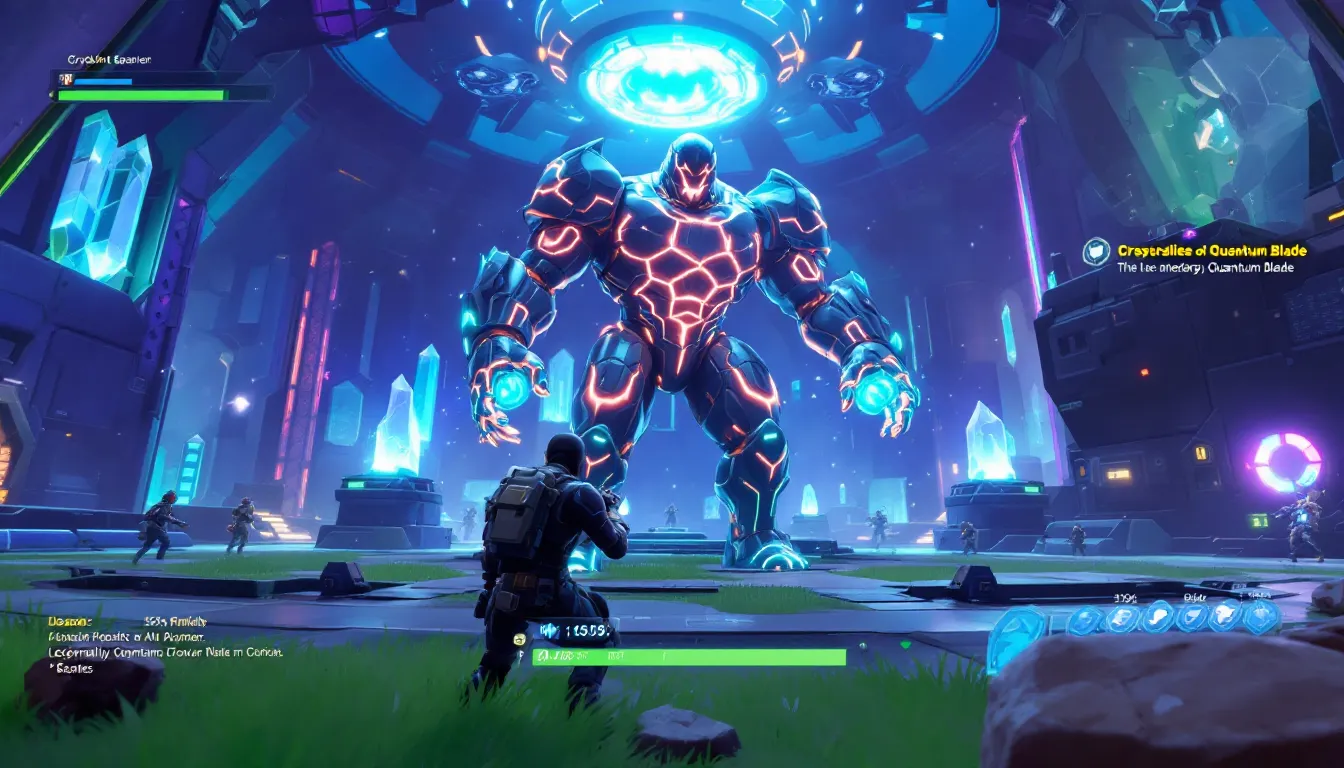
Hunting down bosses in Fortnite isn’t just about bragging rights, it’s a legitimate path to powerful loot and XP gains. Whether you’re chasing exotic weapons, legendary drops, or key cards to unlock high-tier chests, knowing exactly where the bosses are spawning is half the battle. This guide breaks down every current season boss location, the rewards you’re after, and the tactics that actually work when you’re staring down a mini-boss with 200+ health. From casual players grinding for seasonal challenges to competitive squads farming loot, understanding boss mechanics and positioning can shift an entire match’s outcome. Let’s map out the best fortnite boss locations and show you how to farm them efficiently.
Table of Contents
ToggleKey Takeaways
- Fortnite boss locations are concentrated in iconic POIs like Crystalline Caverns, Sentinel Tower, and Ravine Depths, each offering exclusive exotic weapons and legendary loot unavailable from standard enemies.
- Boss hunting provides 500–1,000 XP per kill plus guaranteed exotic weapons with unique mechanics—making it one of the fastest ways to level up and secure top-tier loadouts mid-season.
- Effective boss strategy requires full preparation including max shields, 120+ ammo, healing items, and learning predictable attack patterns at health thresholds (75%, 50%, 25%) to minimize damage taken.
- Squad bosses should be approached with coordinated focus fire, designated roles (DPS, healer, flanker), and minion delegation to reduce fight duration by 30–40% compared to solo attempts.
- Early game (first 3 minutes) offers the lowest third-party risk for boss farming, while secondary spawns like Abandoned Research Station provide safer opportunities than heavily contested primary locations.
- Common fatal mistakes include engaging without a full loadout, ignoring minion pressure, chasing bosses at low shields, and continuing fights as the storm circle moves—all of which waste critical resources and match time.
What Are Fortnite Bosses and Why Hunt Them
Fortnite bosses are named AI-controlled enemies scattered across the island with significantly higher health pools than standard NPCs. Unlike regular unnamed enemies, bosses have specific names, unique ability sets, and controlled spawn locations. They typically range from 200–400 HP depending on the season and difficulty modifiers.
Why hunt them? The payoff is substantial. Bosses drop exclusive loot that regular chests simply don’t offer: exotic weapons with unique perks, legendary-rarity items, and consumables that turn the tide of engagements. Also, defeating bosses counts toward many seasonal challenges and battle pass progression. From an XP perspective, a single boss takedown hands out 500–1000 bonus XP, making boss farming one of the fastest ways to level up mid-season.
Beyond raw loot, bosses are territorial markers. A successful boss hunt signals to you and nearby squads who owns key real estate on the map. This territorial advantage matters in competitive play, where controlling high-value zones influences zone rotations and late-game positioning. Finally, boss encounters are predictable, they don’t rotate away mid-match, so you can reliably practice combat mechanics against varied enemy behavior patterns.
Current Season Boss Locations
Boss locations shift with each seasonal map update, but consistency is key: Epic places bosses in iconic POIs (Points of Interest) that draw traffic and offer narrative significance. In Season 2 of 2026, boss spawns are anchored to major landmark clusters and underground facilities. We’ve mapped the primary and secondary spawn zones below.
Primary Boss Areas and Landmarks
The main boss spawn points cluster around three signature locations:
Crystalline Caverns – Located northwest of the central island, this underground complex hosts a ranged Crystalline Guardian boss. The Guardian uses energy beam attacks and spawns crystal minions when HP drops below 50%. Expect moderate coverage from terrain but tight corridor fighting. Access via ground level entrances or from the cliff face above.
Sentinel Tower – Positioned in the northeastern section, this fortress-style POI harbors the Sentinel Warden, a melee-heavy boss with shield mechanics. The Warden reflects incoming damage when its shield is active and charges at players with high knock-back potential. Open-air arena means less cover but more escape routes.
Ravine Depths – South-central location with dense underground passages. The Ravine Splicer boss uses stealth mechanics and summons multiple support enemies. This is the trickiest boss fight due to limited sightlines and unpredictable enemy spawns from adjacent tunnels.
Secondary Boss Spawns and Hidden Locations
Secondary bosses appear less frequently but offer comparable loot:
Volcanic Ridge – Mid-map terrain with the occasional Magma Sentinel spawn. This boss only appears during certain match windows (approximately 50% spawn frequency) and is less contested. When present, it uses AOE fire attacks, maintain distance and use height advantage.
Abandoned Research Station – Small POI on the eastern edge. The Rogue Researcher boss is the least dangerous in terms of raw DPS but spawns the most minion support. This location is ideal for players practicing boss mechanics without extreme pressure.
Phantom Cathedral – Hidden underground area accessible only through specific rift zones. The Phantom Overseer is the rarest boss spawn and offers the highest loot tier. Its location shifts slightly each match, making it a true treasure hunt. Players hunting Scourge Fortnite: Master the find this boss essential for endgame loadout optimization.
Boss Loot and Rewards
The reason you’re risking a fight: boss loot is genuinely top-tier. Every boss guarantees at least one rare-rarity drop and frequently yields exotics or legendary items that define your loadout for the remaining match.
Unique Items and Exotic Weapons
Bosses are the only guaranteed source for exotic weapons in current rotations. Each boss drops a signature exotic tied to its combat style:
- Crystalline Guardian → Prism Rifle (long-range burst weapon with pierce mechanic: 31 DPS, 2.5 second reload)
- Sentinel Warden → Barrier Cannon (close-range impact weapon that creates protective fields: 52 DPS, 3.2 second reload)
- Ravine Splicer → Phantom Blade (melee-exotic that teleports between targets: 45 DPS, instant cast)
- Magma Sentinel → Inferno Launcher (AOE explosive with burning effect: 38 DPS, 4 second reload)
- Rogue Researcher → Tesla Rod (electrical weapon that chains between enemies: 28 DPS, 2 second reload)
- Phantom Overseer → Void Anchor (utility weapon that immobilizes targets: 22 DPS, but locks enemies in place for 3 seconds)
These exotics shift the meta. The Prism Rifle, for example, is now considered top-tier for mid-range engagements because the pierce mechanic ignores shields, compare this with standard assault rifles which trade off against shield durability. Reading up on Best Weapon in Fortnite: Discover the Ultimate Game-Changer for Victory provides broader weapon theory, but boss exotics operate in their own tier.
Legendary Drops and Key Cards
Every boss kill guarantees one legendary-rarity item plus consumables. Beyond the guaranteed exotic, you’ll receive:
- Legendary Armor Plates (shields): 75 HP per plate, stackable up to 750 total
- Legendary Healing Items: Medkits (75 HP restoration), Chug Jugs (full restore), Slurp Juice (passive regen)
- Key Cards: Essential for unlocking vault chests in POIs. Vault chests contain weapons with higher base stats than standard loot. Orange-tier key cards unlock epic-rarity chests: gold-tier cards unlock legendary chests with guaranteed exotic backups.
The key cards are often overlooked by casual players but are critical for competitive farming runs. A single key card unlocks ~1200 additional loot value, making the card itself worth protecting.
Boss Combat Strategies
Knowing where bosses are is step one. Defeating them without dying (or wasting all your ammo) is the real skill floor.
Preparation Tips Before Battle
Before engaging any boss, land with these fundamentals locked in:
- Scout First: Approach the boss zone from a distance. Use binoculars or height advantage to gauge minion positions and boss AI state. Don’t rush into aggro range blind.
- Gather Resources: Collect wood (150+) and brick (100+) before engagement. You’ll need building materials for cover adjustments during the fight.
- Full Armor: Ensure you’re at max shields. Every fight assumes you’re at 100 HP + 75 shields minimum. Less than that and a single combo from a boss wipes you.
- Ammo Surplus: Stock at least 120 rounds of primary ammo. Boss fights are prolonged: empty magazines are momentum killers.
- Healing Stack: Carry 2–3 healing consumables. Medkits are reliable: chug jugs provide full restore but take longer to consume.
- Position Advantage: Enter the boss arena from high ground or behind cover if possible. Starting from a defensive position lets you control engagement tempo.
Effective Weapons and Loadout Recommendations
Not all weapons are created equal against boss health pools. Here’s the meta loadout for 2026 boss farming:
Primary Weapon: Assault Rifle (100+ DPS variants)
- Sustained damage is king in boss fights. Assault rifles like the Tactical Pulse Rifle (42 DPS, 2.1 second reload) or Legendary Assault Carbine (48 DPS, 2.8 second reload) are reliable workhorses.
- Pros: Accurate at range, minimal reload gaps, versatile against minions too.
- Cons: Lower single-shot damage compared to sniper/shotgun alternatives.
Secondary Weapon: Shotgun (140–180 DPS)
- For close-range burst and repositioning punishment. Combat Shotgun (68 DPS, 1.8 second reload) or Legendary Pump Shotgun (90 DPS, 2.5 second reload).
- Pros: Massive burst damage, excellent for phase transitions when bosses move closer.
- Cons: Requires close range: bad against ranged bosses if you’re not confident in movement.
Utility Weapon: Utility Launcher or SMG
- Utility Launcher (50 DPS, applies debuffs like slow or knockback) pairs well with assault rifles for controlling space.
- Legendary SMG (52 DPS, 1.6 second reload) as alternative for aggressive close-quarters adjustments.
Recommended Loadout for Solo Boss Hunts:
- Tactical Pulse Rifle (primary)
- Combat Shotgun (close engage)
- Utility Launcher (positioning control)
- Medkit (healing)
- Chug Jug (emergency restore)
This loadout balances damage output, repositioning tools, and survivability. You’re not trying to burst down a boss in 10 seconds: you’re trading methodically while staying healthy.
Tactics for Solo vs. Squad Boss Hunts
Solo Boss Strategy:
- Kiting: Keep distance and circle-strafe around boss attacks. Most boss attacks are directional: forcing them to retarget wastes their action economy.
- Cover Usage: Use terrain rocks, walls, and structures as damage sinks. Don’t peek-and-hold positions: peek, shoot 2–3 rounds, break line of sight, reposition.
- Phase Awareness: Bosses shift attack patterns at HP thresholds (75%, 50%, 25%). Learn these phases during your first 30 seconds of engagement. The Phantom Overseer changes to stealth mode at 50% HP, be ready to track via footstep audio and look for shimmer distortion.
- Minion Priority: Kill high-threat minions first (ranged units), ignore low-threat ones (melee tanks). A stray shot from a minion during your boss rotation isn’t worth ammo investment.
Squad Boss Strategy:
- Roles: Designate one player as primary DPS, one as healer/support, one as flanker/minion control. The fourth adapts based on boss behavior.
- Focus Fire: Don’t split damage. All four players should focus the same target in a 4–5 second burst, forcing the boss into stun or knockback animations. Staggered fire just prolongs the fight.
- Revive Rotation: Always have one player outside active threat as insurance. If someone drops, that player initiates revive while others maintain aggro.
- Ammo Sharing: Squads should pool ammo drops. If one player runs dry on AR ammo, swap to their backup while they farm ammo from fallen minions.
Squad fights with coordinated focus fire reduce boss health by 30–40% faster than solo play, making the XP-per-minute farm significantly more efficient.
Minion Encounters and Support Enemies
Bosses don’t fight alone. Every boss zone spawns 3–6 minion support enemies that escalate the danger significantly. Understanding minion mechanics is the difference between a clean boss kill and getting third-partied by chaotic AI behavior.
Minion Types by Boss:
- Crystalline Guardian spawns Crystal Drones (ranged, 30 HP each, 12 DPS): Low-threat individually but dangerous in groups. Prioritize these if you’re maintaining range from the boss.
- Sentinel Warden spawns Shield Sentries (melee tank, 60 HP each, 18 DPS): These absorb punishment but deal low damage. Ignore them if the boss is aggro on you: let the boss pull their attention.
- Ravine Splicer spawns Void Tendrils (melee swarm, 20 HP each, 8 DPS): Individually weak but spawn continuously during the fight (up to 8 active at once). Use AOE utilities (grenades, launchers) to clear groups.
- Magma Sentinel spawns Lava Crawlers (melee rush, 40 HP each, 22 DPS): Most aggressive minion type. Isolate them away from the boss before engaging if possible.
Minion Strategy:
Don’t tunnel-vision the boss. Allocate 15–20% of your firepower to minion management. If minions outnumber you 5-to-1, you’re taking unnecessary chip damage that compounds. A quick 5-round magazine dump into a minion cluster clears space and keeps your health intact for the actual boss fight.
In squad play, minion control is delegated. One player cycles minion duty while three focus boss DPS. In solo, you manage both, prioritize minions that have direct line of sight to you, then rotate back to boss damage.
Best Time to Hunt Bosses
Timing matters. Boss hunts are time-efficient early in a match but risky late. The game state and server population dramatically affect your success odds.
Early Game vs. Late Game Strategies
Early Game (First 3 Minutes, Storm Circle 1–2):
- Pros: Low third-party risk, minimal player interference, bosses have full health (more predictable), ample time to farm post-boss loot.
- Cons: You’re resource-starved (limited ammo/shield), other players may land at the same POI as you.
- Strategy: Land hot at a secondary boss spawn (Abandoned Research Station or Volcanic Ridge). The Rogue Researcher and Magma Sentinel are easier targets and less contested. Grab the exotic weapon, heal up, and rotate into zone before the circle moves.
Mid Game (5–10 Minutes, Storm Circle 3–4):
- Pros: You’ve looted two POIs, have reasonable shield/ammo, storm pressure isn’t severe yet.
- Cons: Moderate third-party risk, bosses may already be claimed by early-landing squads.
- Strategy: Hunt primary bosses (Crystalline Caverns, Sentinel Tower, Ravine Depths) only if you’ve scouted the area clear of enemy teams. The risk-reward shifts if you’re fighting both a boss and enemy squad simultaneously, mitigate this by hunting in zones outside natural rotation paths.
Late Game (12+ Minutes, Storm Circle 5+):
- Pros: Most players are in final zones: boss areas are abandoned. If a boss is still alive, it’s your guaranteed loot.
- Cons: Storm damage is severe, limited time to fight, boss kill is a binary outcome (win the fight or die in storm).
- Strategy: Only hunt bosses in late game if the boss zone overlaps with final circles or if you’re already passing through. Don’t divert to a distant boss with 30 seconds until storm arrival. The time cost > loot value.
Server Population and Spawn Frequency
Boss spawn rates vary by server population and match duration:
- Full Lobby (100 players): All bosses spawn. Expect contested zones at primary locations. Secondary bosses remain safer.
- Moderate Lobby (60–80 players): Primary bosses spawn reliably: secondary bosses have ~70% spawn chance.
- Low-Pop Lobby (20–40 players): Only 1–2 primary bosses spawn: secondary bosses rarely appear. This is actually ideal for farming efficiency, less competition, but fewer boss options.
Server population changes throughout the day. Evenings (6 PM–11 PM local) are peak times with full lobbies and heavy third-party risk. Early mornings (5 AM–8 AM) and late nights (11 PM–3 AM) have lighter populations. For pure farming efficiency, early morning slots offer the best boss density-to-interference ratio.
Season timing also matters. During the first week of a season, boss spawn zones are heavily contested as everyone farms exotics. Weeks 3–5 of a season see lighter boss traffic as meta shifts to other farming methods. If you’re grinding seasonal challenges, week 1 is necessary: if you’re building a loadout, weeks 3+ are more efficient from a time-per-boss ratio.
Common Mistakes to Avoid
Even experienced players leave efficiency on the table. Here are the most common boss-hunting mistakes:
Engaging Without Full Loadout
- Many players jump into a boss fight with whatever weapons they’ve found in the last 30 seconds. This is a stall-and-fail strategy. A boss fight requires dedicated gear. If you don’t have an assault rifle and a healing item, back off and loot first. The 90 extra seconds of prep time saves you from wasting 180 seconds dying and respawning.
Chasing a Boss at Low Shield
- You’re at 25 HP and no shields. A boss roams nearby. The temptation is to rush in and hope for the best. Don’t. The first minion attack or boss knockback combo triggers a wipe. Always maintain 75+ shield before engagement. No exceptions.
Neglecting Minion Control
- Tunneling the boss while minions freely damage you is a death spiral. After 15 seconds of focused minion pressure, you’re taking 60+ DPS from support enemies alone. Budget 20% of your firepower for minion management or switch tactical approaches (use launchers for AOE instead of precision weapons).
Not Learning Boss Attack Patterns
- Boss attacks follow predictable telegraphs. The Sentinel Warden has a 1.5-second wind-up before charging. The Crystalline Guardian has a 0.8-second delay before beam fire. Learn these tells. A single learned tell prevents you from eating a full combo and respawns you at the POI instead of the lobby.
Farming Solo Against Squad Bosses
- Some bosses (Phantom Overseer, Crystalline Guardian) are balanced for squad encounters. Solo players take 2–3x longer and burn more resources. Unless you’re farming a specific exotic, know your skill ceiling. If a boss is wiping you repeatedly, either farm a different boss or grab a squad member.
Ignoring the Storm
- You’ve been fighting a boss for 90 seconds. The storm circle just moved and your position is now outside the new zone. You have 20 seconds before storm damage starts. Many players continue fighting and take storm damage while healing, this is a resource bleed. As soon as the new circle is revealed, assess: can you finish the boss in 15 seconds? If no, disengage and rotate. The exotic weapon isn’t worth dying to zone mechanics.
Not Looting Efficiently Post-Kill
- You beat the boss. Minions are dead. Now loot intelligently: grab the exotic weapon first, then the key card, then healing items. Don’t pick up ammo or materials immediately, you can farm these in surrounding areas. If teammates are pressuring you or storm is moving in, grab the essential loot and leave the rest. Many players waste 15 seconds organizing their inventory and miss final circle rotations.
Conclusion
Boss hunting in Fortnite is a skill that scales with practice. You’ll learn where the bosses are, which ones suit your loadout, and the rhythms that make farming feel like second nature rather than stress. The exotic weapons and legendary loot are meaningful upgrades, not just cosmetics, that shift your endgame survivability and combat effectiveness.
Start with secondary bosses (Rogue Researcher, Magma Sentinel) to build pattern recognition. Move to primary bosses once you can consistently survive the first 30 seconds. Squad up when tackling the hardest targets like Phantom Overseer. Track which bosses are spawning in your regular landing zones, and build muscle memory around their attack cadences.
Remember: a boss kill that takes 3 minutes but leaves you full-shield with an exotic weapon is better than a 1-minute kill where you’re limping away with 25 HP. Longevity beats speed in Fortnite. The next engagement, whether it’s another squad or a late-game zone fight, will reward you for being resource-efficient during boss encounters.
Getting up to speed with current Fortnite meta strategies makes the entire boss-hunting experience smoother. For those diving deeper into advanced tactics, exploring Lyric Fortnite: Elevate Your Game with Music and Fun and keeping tabs on When Is the Fortnite Event Today? Don’t Miss Epic Challenges and Live Performances helps you stay connected to seasonal shifts and event-driven balance changes. The hunt for bosses continues with every new season, good luck out there.