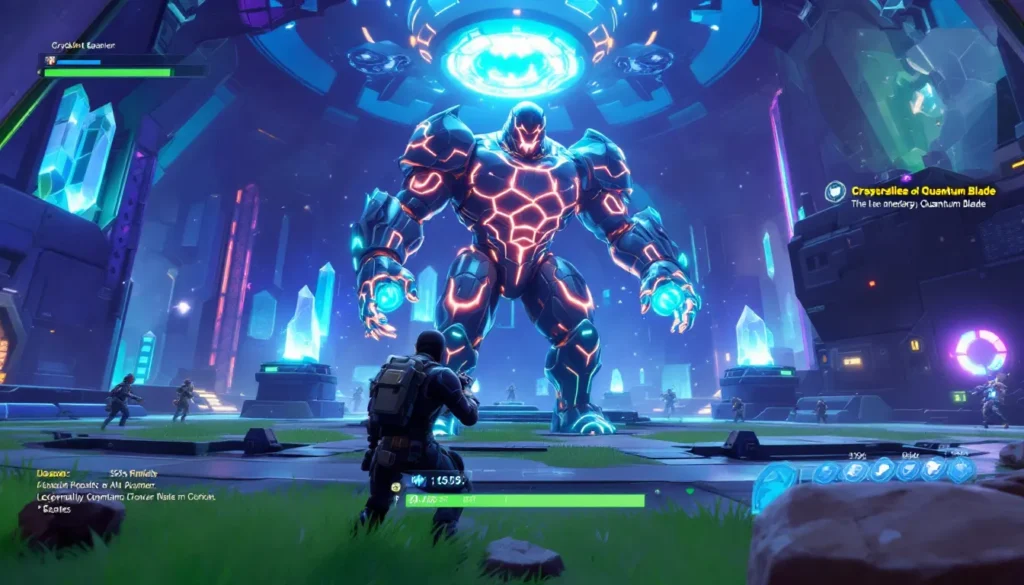
The question echoes across Discord servers and Reddit threads: when will Fortnite end? For a game that’s dominated the battle royale landscape since 2018, the idea of Fortnite shutting down feels almost unthinkable, yet it’s a legitimate concern for millions of players who’ve invested time, money, and emotional energy into Epic Games’ juggernaut. Unlike single-player campaigns that have definitive endings, live-service games like Fortnite exist in a peculiar state of perpetual uncertainty. Server costs mount, player interest fluctuates, and leadership decisions can change overnight. But here’s the reality: Fortnite isn’t just another seasonal shooter destined for the digital graveyard. It’s a cultural phenomenon with revenue streams most games can only dream about. Understanding whether Fortnite will actually end requires looking beyond speculation and examining the actual forces that keep billion-dollar live-service games alive, and what it would take to shut them down.
Table of Contents
ToggleKey Takeaways
- Fortnite will not end anytime soon because it generates billions in annual revenue and Epic Games has committed to it as a decades-long project, not a temporary cash grab.
- Live-service games like Fortnite shut down only when publishers decide they’re unprofitable, but Fortnite’s 200-400 million monthly active users and consistent revenue make this scenario extraordinarily unlikely.
- Fortnite’s cross-platform infrastructure, cultural relevance through celebrity partnerships, and continuous seasonal content pipeline represent structural advantages that prevent shutdown even if competition intensifies.
- Regulatory changes or legal challenges pose the most serious threat to Fortnite’s monetization model, but even these wouldn’t necessarily result in server shutdown—only a shift in business strategy.
- Based on historical precedent from World of Warcraft and similar successful live-service games, when will Fortnite end is a question with an indefinite answer—the game is built to evolve and persist indefinitely.
- Players should enjoy Fortnite’s current experience without shutdown anxiety, diversify their gaming portfolio for healthy engagement, and make strategic cosmetic choices based on personal preference rather than scarcity concerns.
Understanding Fortnite’s Current Status and Longevity
What We Know About Epic Games’ Long-Term Vision
Epic Games has been incredibly clear about their intentions: Fortnite is not going anywhere soon. In multiple interviews and public statements, leadership has framed Fortnite as a decades-long project, a universe they’re actively building, not a temporary cash grab. CEO Tim Sweeney has consistently positioned the game as infrastructure for a larger metaverse vision, which means shutting it down would contradict Epic’s entire corporate strategy.
What’s critical here is that Epic owns the entire stack. They own the Unreal Engine that powers the game, the platform it runs on, and the intellectual properties within it. This vertical integration matters enormously when assessing longevity. Companies can’t easily abandon games they’ve bet their future on without massive financial and reputational consequences.
The company has also invested billions in exclusive content and celebrity partnerships. When you’re paying A-list musicians for concert events and securing licensing deals with major franchises, you’re not planning a three-year sunset. You’re building a long-term entertainment platform.
Player Base and Revenue Trends
Fortnite‘s numbers are staggering. The game boasts over 500 million registered players, though monthly active users typically hover in the 200-400 million range depending on the season. These aren’t niche numbers, they rival major social platforms. More importantly, the game’s revenue remains absolutely massive, consistently generating billions annually through battle pass sales, cosmetics, and premium currency.
In 2024 and 2025, even though predictions of decline from various analysts, Fortnite maintained its position as one of the top-grossing games globally. Sure, there are seasonal dips, but the overall trajectory isn’t toward collapse. Players rotate in and out based on content drops and seasonal themes, but the core playerbase remains absurdly stable.
What this means for longevity is straightforward: as long as Fortnite generates revenue at this scale, Epic Games has zero financial incentive to shut it down. The business case for keeping the servers running is almost trivially easy to justify. Even if player counts dropped by 80%, the game would still be one of the most profitable titles in the industry.
Why Games Like Fortnite Typically End
Server Shutdowns and Publisher Decisions
When do live-service games actually die? Usually, it comes down to a deliberate business decision. Servers don’t shut down because they have to, they shut down because keeping them running stops making financial sense. This happened with games like Marvel’s Avengers (shuttered cosmetic sales), Anthem (critical failure on launch), and countless free-to-play titles that couldn’t convert players into paying users.
The pattern is consistent: a game launches, fails to meet revenue expectations, and the publisher pulls the plug. The server infrastructure costs money, not astronomical amounts for major publishers, but enough that they’ll only maintain it if the game still generates revenue.
For Fortnite, this scenario is extraordinarily unlikely. The game isn’t struggling to convert players or maintain engagement. It’s the opposite problem: Epic is struggling to keep up with demand for content and cosmetics. The publisher isn’t looking for an exit strategy: they’re investing more into the ecosystem.
Declining Player Engagement and Financial Performance
The second reason games shut down is gradual, unavoidable decline. A game’s audience shrinks over years until the playerbase becomes too small to sustain communities. This happened with earlier battle royales like H1Z1 and Realm Royale, which couldn’t compete with Fortnite and PUBG.
But, Fortnite isn’t showing signs of that kind of decline. Yes, there are seasonal fluctuations, content droughts lead to fewer players, new seasons bring them back. But the overall active playerbase remains in the hundreds of millions. The game still breaks viewership records on Twitch and YouTube during major events and new season launches.
The real metric that would signal trouble isn’t raw player count, it’s revenue per user and retention. And on both fronts, Fortnite is thriving. Battle pass adoption remains exceptionally high, cosmetic sales continue to break records, and when is the next season of fortnite announced, player login rates spike. This is a game people still care about enough to spend money on, which is literally all that matters for longevity.
Fortnite’s Competitive Advantages in an Evolving Gaming Market
Cross-Platform Infrastructure and Accessibility
Fortnite’s biggest structural advantage isn’t a weapon or skin, it’s accessibility. You can play on PC, PlayStation 5, Xbox Series X, Nintendo Switch, and mobile devices through cloud streaming. This cross-platform ecosystem means there’s no single platform barrier to entry. Your friends play on different hardware? Doesn’t matter.
This infrastructure alone represents years of development and millions in investment. Epic Games isn’t going to scrap it. They’ve spent the better part of a decade optimizing netcode, building cross-platform progression systems, and ensuring input lag doesn’t vary wildly between platforms. That’s not something you rebuild for a successor game, it’s a moat.
Mobile gaming is particularly important. Many games have abandoned mobile, but Fortnite maintained presence through cloud streaming and partnerships. This kept the game accessible to younger and more casual audiences who primarily game on phones and tablets. That’s an entire demographic many competitors outright surrendered.
Cultural Relevance and Celebrity Integration
Fortnite transcended the label of “just a video game” around 2019. When Drake played with Ninja and the livestream hit millions of concurrent viewers, something shifted. The game became a cultural currency.
This cultural position is incredibly valuable and incredibly fragile. It requires constant feeding with fresh content, celebrity appearances, and cultural moments. Epic has understood this better than almost any other game publisher. They’ve hosted concerts with Travis Scott and The Weeknd, secured exclusive cosmetics from Marvel and DC, and built limited-time events around real-world moments.
This approach requires sustained investment and creative momentum. If Fortnite ever became “old” or “uncool,” the cultural moat would collapse. But that’s a different threat than the game actually shutting down. It’s about maintaining relevance, not keeping servers online. And critically, Epic’s willingness to spend aggressively on cultural moments suggests they plan to keep that machine running indefinitely.
Seasonal Updates and Content Pipeline
Fortnite operates on a roughly 10-week seasonal cycle. Each new season brings narrative progression, new weapons, map changes, and cosmetics. This is a massive undertaking, we’re talking about hundreds of developers working on a continuous content assembly line.
The scale of this operation is worth emphasizing: maintaining this pace requires permanent staff, studio space, and recurring licensing deals. You don’t hire and structure teams this way if you’re planning to wind down the game in five years. Epic has built an organization specifically designed to support Fortnite perpetually.
When does the fortnite battle pass end and when does new fortnite season come out are questions players ask constantly, but the underlying point is that these seasons are planned literally years in advance. Epic has narrative arcs, cosmetic roadmaps, and event calendars extending well beyond 2026. This isn’t the infrastructure of a game winding down, it’s the infrastructure of a game expecting to operate indefinitely.
Historical Examples of Successful Live-Service Games
Games That Have Thrived for Over a Decade
World of Warcraft launched in 2004 and still operates today, over 20 years later. League of Legends started in 2009 and remains the most-played competitive game globally. Counter-Strike: Global Offensive ran from 2012 until its successor launched in 2023. Final Fantasy XIV’s servers went down once in 2010, came back, and have been live ever since with over a million active subscribers.
These games share characteristics with Fortnite: recurring revenue models, passionate communities, regular content updates, and corporate ownership from publishers committed to long-term support. None of these games shut down because they became unprofitable. They either evolved into successors or maintained active status because the business case remained sound.
WoW’s longevity is particularly instructive. Blizzard has maintained that game’s servers through leadership controversies, gameplay changes that alienated portions of the playerbase, and the emergence of competitors. Why? Because it still generates revenue. The same logic applies to Fortnite on an even grander scale, the game is far more profitable per user than WoW ever was.
Lessons From Games That Did Shut Down
When games actually do shut down, the pattern is almost always the same: the game failed at launch, never found an audience, or became actively unprofitable. Marvel’s Avengers was shut down not because it became old or boring, but because it launched to poor reviews, failed to engage players meaningfully, and hemorrhaged money. Anthem had similar issues.
Other games shut down when their genre fell out of favor or competition became insurmountable. But here’s the key difference: those games were never dominant in their category. They were niche players trying to compete against entrenched leaders.
Fortnite is the entrenched leader. It’s the game that other battle royales failed to compete against. The business dynamics are completely different. Fortnite doesn’t need to shut down because it’s failing, it would shut down because leadership decided to stop operating it even though success, which is not a rational business decision.
According to reporting from industry sources like Dexerto, games with Fortnite’s revenue profile and player engagement remain online for as long as they generate positive cash flow. There’s literally no historical precedent for a company abandoning a profitable live-service game the scale of Fortnite.
Potential Scenarios: What Could Change Fortnite’s Future
Economic and Legal Challenges
The most serious threat to Fortnite’s longevity isn’t gameplay decline, it’s regulatory and legal headwinds. Governments worldwide have been scrutinizing battle passes, loot boxes, and cosmetic pricing. There’s also the ongoing lawsuit with Apple about the App Store’s revenue sharing policies, which has broader implications for how Epic monetizes games.
If governments eventually banned cosmetic monetization, loot boxes, or battle passes, Fortnite’s revenue model would collapse overnight. But even then, the servers wouldn’t necessarily shut down, they’d just need to transition to a different business model or become free without cosmetics.
Another economic risk is if Epic Games’ parent company, which includes Tencent as a major shareholder, faced severe financial distress or changed strategic priorities. But this is increasingly unlikely as Epic has become more profitable and autonomous. The company recently went through restructuring to focus on profitability, which ironically strengthens rather than weakens their commitment to major franchises.
What about licensing costs? Fortnite has millions of cosmetics tied to licensed IP, Marvel, DC, Star Wars, etc. If licensing costs became prohibitively expensive, that could impact profitability. But cosmetics aren’t the game, they’re the revenue model. The core game would continue functioning. Also, Epic has leverage in licensing negotiations given Fortnite’s cultural prominence.
Technological Shifts and Hardware Evolution
What if gaming hardware evolved in ways that made Fortnite’s engine incompatible? This is theoretically possible but practically unlikely. Unreal Engine has already evolved through multiple console generations. Epic actively updates the engine to support new hardware. The company isn’t going to let aging technology be a reason to abandon the most profitable game in its portfolio.
There’s also the question of when is next fortnite season versus when will the technology underlying the game become obsolete. These are separate issues. Games can run on aging technology for decades if maintaining them remains profitable. Emulation now allows people to play 30-year-old games on modern hardware, the technical barriers to keeping servers online are not insurmountable.
Cloud gaming represents another evolution. Fortnite’s already testing cloud streaming on mobile. As cloud becomes more prevalent, the game’s underlying technical platform matters less. The game could theoretically run on servers regardless of local hardware capabilities.
Competition and Market Saturation
This is the most legitimate long-term concern. If a competitor emerges that genuinely captures the audience in a way Fortnite can’t match, player migration could accelerate. Games like Helldivers 2 and The First Descendant have shown that well-executed competitors can draw substantial audiences away from established titles.
But competition doesn’t kill Fortnite, competition forces evolution. And Fortnite has evolved continuously. When PUBG emerged, people predicted Fortnite would die. When Apex Legends launched with superior gunplay, people predicted the same. When Warzone arrived with Modern Warfare integration, again, same prediction.
None of it happened. Fortnite adapted, invested in content, and maintained its cultural relevance. As long as the competitive threat doesn’t simultaneously destroy the game’s profitability and Epic’s ability to respond, the game continues.
But, there’s a scenario where the entire battle royale genre becomes less popular and players migrate to other game types entirely. MMOs, roguelikes, and looter shooters all have strong communities. If the cultural zeitgeist shifts hard enough, Fortnite’s dominance could erode. But again, server shutdown isn’t the result, it’s reorientation. How many seasons of fortnite are there already, and that number likely continues growing unless the entire genre collapses, which doesn’t look remotely imminent in 2026.
Expert Predictions and Community Speculation
What Industry Analysts Are Saying
Most serious industry analysts, the type quoted by Video Games Chronicle, don’t predict Fortnite’s shutdown. They predict evolution. The consensus is that Fortnite will continue operating for at least another 5-10 years with high confidence, possibly significantly longer.
Analysts focus more on questions like: will Fortnite’s cultural relevance persist? Will cosmetic monetization remain as profitable? Will competition fragment the playerbase? But “will servers shut down” isn’t really in the conversation among people paid to predict gaming industry trends.
When analysts do discuss live-service longevity, they typically reference the WoW model, a game that, even though periods of reduced popularity, has continued running because the publisher chose to keep it online. Fortnite’s revenue profile is actually more favorable than WoW’s, suggesting longer natural longevity.
There are some bear-case analysts who argue that Fortnite’s cosmetic monetization is unsustainable long-term, that player fatigue will eventually set in, or that regulatory crackdowns will force business model changes. But even these pessimistic takes don’t predict actual shutdown, they predict decline and eventual replacement by a successor.
How the Gaming Community Perceives Fortnite’s Sustainability
The gaming community is split into roughly three camps: those who think Fortnite will last indefinitely (the optimists), those who think it’ll gradually decline and eventually shut down (the pragmatists), and those who think it’ll be replaced by a superior competitor (the skeptics).
But even the skeptics generally assume “replacement” means a new game, not complete abandonment. When does the new fortnite season end becomes less relevant if players have moved to a newer title, but that’s different from Fortnite’s servers actually shutting down.
Reddit’s r/FortniteCompetitive and r/FortNiteBR communities occasionally discuss longevity, but the tone has shifted over time. Early-era predictions of “Fortnite will die when [next big game launches]” have given way to acceptance that Fortnite is just… a permanent fixture now. Players discuss when is the fortnite season ending, what is the next season of fortnite, and fortnite update time with the assumption that seasons will continue.
Streamers and content creators largely operate as if Fortnite will persist indefinitely. They’re building entire careers around the game. That implicit vote of confidence from people who actually monitor gaming trends daily carries more weight than Reddit speculation.
Preparing for the Unlikely: How Players Should Approach the Game
Enjoying Fortnite While It Lasts
Here’s the practical reality: even if Fortnite were shutting down tomorrow (which it isn’t), the healthiest approach for any player is to enjoy the game for what it is right now. Worrying about distant hypothetical shutdowns is wasted energy.
This means engaging with seasonal content, participating in events, and investing in cosmetics you actually want rather than hoarding skins out of scarcity anxiety. When new battle pass seasons arrive and players wonder when will fortnite end, the answer from a lifestyle perspective is: play now, enjoy later. The seasonal model is designed to reward active participation.
That said, make strategic cosmetic choices. Licensed cosmetics tied to specific IP might not be available forever, once licensing deals expire, those skins rotate out. But permanent cosmetics created directly by Epic will persist as long as the game exists.
For competitive players, continue grinding ranked modes, participate in tournaments, and build your skills. Fortnite’s esports infrastructure is expanding, not contracting. If the game ever did shut down, you’d have years of warning before that became reality. No publisher suddenly flips a kill switch on a billion-dollar game.
Diversifying Your Gaming Portfolio
That said, putting all your gaming enthusiasm into a single live-service game is never wise, regardless of that game’s longevity. This isn’t about Fortnite’s sustainability: it’s about healthy engagement patterns.
Players should explore other titles, build communities across multiple games, and develop skills that transfer across genres. If you’re a hardcore Fortnite player, try competitive games like Valorant, Counter-Strike 2, or Apex Legends to sharpen different skillsets. Try roguelikes like Hades or Vampire Survivors. Play narrative-driven single-player games.
This approach has multiple benefits: it reduces burnout, prevents overdependence on any single game’s economy or cosmetics, and makes you a more well-rounded gamer. It’s also the best insurance against long-term gaming frustration. If Fortnite’s meta shifts in ways you hate or new content doesn’t appeal to you, you have alternatives.
Diversification also means not spending excessively on cosmetics in any single game. Battle pass investment in Fortnite makes sense if you’re going to play regularly, but treating cosmetics as financial investments is dangerous. They’re entertainment purchases with zero resale value (outside trading communities, which Epic actively discourages).
The key insight is this: Fortnite will almost certainly continue operating, but your enjoyment of it depends on your own engagement choices, not the game’s longevity. Play what’s fun, invest thoughtfully, and keep other gaming experiences in rotation.
Conclusion
The short answer to “when will Fortnite end” is: probably not anytime soon, and likely not in any way that would surprise players or leave them stranded. Unlike single-player games that have natural endpoints, live-service games persist as long as two conditions hold true: they generate revenue and their publisher chooses to maintain them. Fortnite satisfies both conditions aggressively.
The game has structural advantages that most competitors will never match: billions in investment, a loyal playerbase in the hundreds of millions, unmatched cultural relevance, and a parent company with both the resources and motivation to support it long-term. When players ask how many seasons of fortnite are there, they’re implicitly asking a question with an indefinite answer, because there will likely be many more.
CouldFortnite eventually shut down? Theoretically, yes. Regulatory changes, catastrophic leadership decisions, or fundamental market shifts could theoretically accelerate that timeline. But based on precedent from games like World of Warcraft and the Fortnite franchise’s current trajectory, the game is far more likely to evolve, adapt, and continue operating than to disappear.
For players, the takeaway is straightforward: enjoy Fortnite for what it offers now without anxiety about distant hypotheticals. The game will announce far in advance if anything fundamental changes. In the meantime, when is the next fortnite season 5 or whenever the next season launches, you can engage knowing the infrastructure supporting the game is genuinely built for the long haul, not as a temporary cash grab, but as a permanent platform. And that’s actually a comforting thing for anyone who cares about this game’s future.